

How to Wear a Black Suit: A Modern Guide to Timeless Elegance
The black suit carries a certain weight. It is often associated with strict formality, reserved for somber events or rigid corporate dress codes. This perception can make it feel restrictive, even dated, rather than the versatile cornerstone it should be. Yet, the modern black suit is a canvas for personal style, capable of far more than its reputation suggests. The key lies not in the suit itself, but in the precision of how it is styled.
This guide moves beyond the obvious pairings. We will explore the art of dressing a black suit up for formal elegance and dressing it down for sophisticated, smart-casual settings. You will learn the principles of selecting the right shirts, shoes, and accessories to transform this timeless piece. The goal is simple: to equip you with the confidence to view your black suit not as a uniform, but as a statement of enduring style. Consider this your definitive manual for mastering modern elegance.
Key Takeaways
- A precise fit is the most critical element of a suit. Discover the key details that define a perfect silhouette.
- Master the versatility of a black suit for any dress code, from formal polish to smart-casual elegance.
- Identify and avoid the common styling mistakes that detract from a suit's impact, ensuring your appearance is always intentional.
- Adopt simple maintenance practices to protect your suit as a long-term investment, ensuring timeless style and durability.
The Foundation: Selecting the Perfect Black Suit
Impeccable style begins not with trends, but with the right garment. The black suit is a cornerstone of a modern wardrobe, yet its true power is unlocked through precision and quality. Before considering any styling, the foundation-the suit itself-must be flawless. Its success rests on three essential pillars: fit, fabric, and cut.
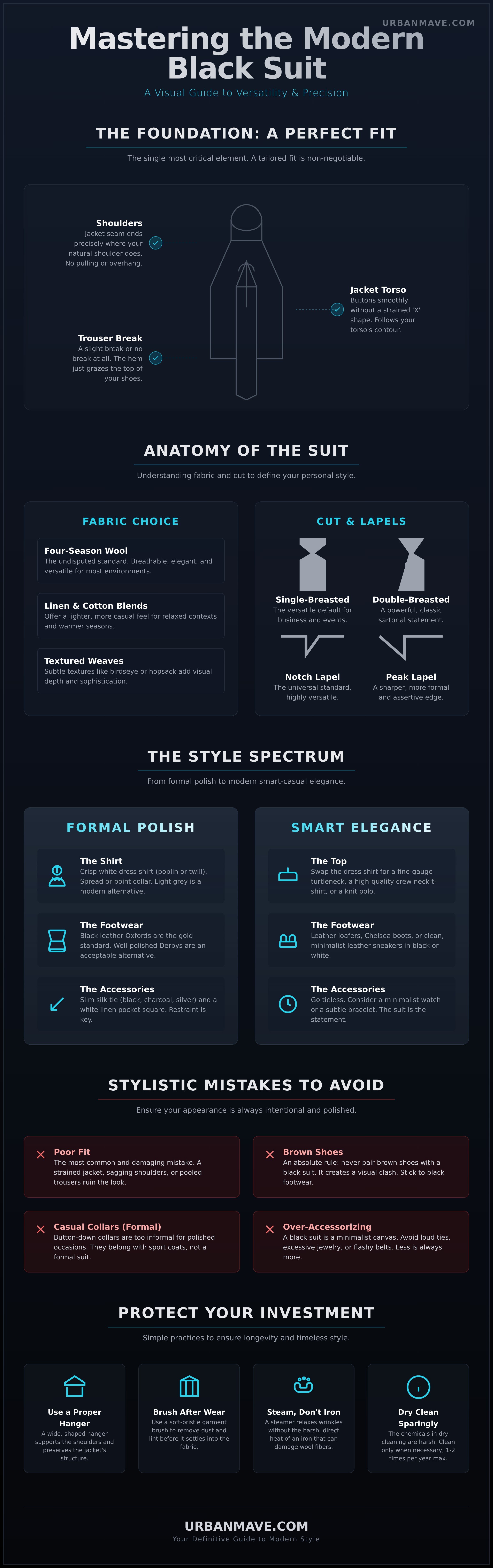
To better understand the versatility of a well-chosen suit, this guide provides a clear visual reference.
Fit is Non-Negotiable: The Principles of a Perfect Silhouette
Fit is the single most critical element of a suit. It is absolute. A bespoke-quality garment with poor fit is inferior to a modest suit tailored to perfection. Adhere to these principles for a sharp, modern silhouette:
- Shoulders: The jacket's shoulder seam must end precisely where your natural shoulder does. There should be no pulling or overhang.
- Jacket Torso: The jacket should button smoothly without creating a strained 'X' shape across your chest. It must follow the natural contour of your torso.
- Trouser Break: For a clean, contemporary line, opt for a slight break or no break at all. This means the trouser hem just grazes the top of your shoe.
Consider a skilled tailor an essential partner. Their expertise can refine an off-the-rack suit into a garment that feels custom-made.
Fabric as a Statement: Wool, Blends, and Texture
The choice of fabric dictates the suit’s character, drape, and seasonality. For timeless versatility, four-season wool is the undisputed standard. Its natural breathability and elegant structure are ideal for most environments. For a more relaxed context, linen or cotton blends offer a lighter, more casual feel. Subtle textures, such as a birdseye or hopsack weave, can also introduce visual depth and sophistication without compromising the suit’s minimalist integrity.
Cut and Style: Single vs. Double-Breasted
A suit’s cut defines its formal language and overall impression. While the History of the Suit reveals a rich evolution of styles, modern menswear centers on a few key distinctions. The single-breasted, two-button jacket remains the versatile default, appropriate for business and formal events alike. In contrast, the double-breasted cut makes a powerful, sartorial statement rooted in classic tailoring. Lapels also play a crucial role: the notch lapel is the universal standard, while the peak lapel lends a sharper, more formal edge to your black suit.
Styling for Formal Occasions: Precision and Polish
The black suit is a statement of authority in formal settings. Its power lies in its simplicity and the precision of its execution. For weddings, galas, and significant business events, success is defined by adherence to timeless rules, elevated with a modern, minimalist sensibility. It is crucial to distinguish this attire from a tuxedo; while both are formal, a black suit offers a different, more versatile form of elegance. A tuxedo is defined by its satin details-lapels, buttons, and a stripe down the trouser leg-and is reserved strictly for black-tie events.
The Essential Shirt Pairing
A crisp white dress shirt is the definitive foundation. The choice of fabric dictates the finish-cotton poplin offers a sharp, smooth surface, while a fine twill provides subtle texture and depth. For a contemporary interpretation, a light grey or charcoal shirt can create a sophisticated, tonal look. The collar must be structured and sharp; a classic spread or point collar is ideal. Button-down collars are too casual for this level of formality.
Definitive Footwear Choices
Footwear is non-negotiable. Black leather Oxford shoes are the gold standard, their closed-lacing system creating a sleek, uninterrupted silhouette. Well-polished Derbys or single monk straps are acceptable alternatives, offering a slight deviation without sacrificing formality. The rule is absolute: never wear brown shoes with a black suit. This principle is a cornerstone of classic menswear, a foundation detailed in any quality a modern guide to black suit combinations. Focus on a quality leather sole and a refined profile.
Accessorizing with Restraint
Formal accessorizing is an exercise in minimalism. Each piece should be deliberate and functional, enhancing the suit without distracting from it. The objective is polish, not ostentation.
- The Tie: A slim silk tie in solid black, charcoal, or silver. Texture, like a fine grenadine weave, can add interest.
- The Pocket Square: A white linen or cotton pocket square is the only choice. Present it with a clean, straight presidential fold.
- The Details: A classic timepiece with a leather strap or metal bracelet and subtle, elegant cufflinks are all that is required.
- The Belt: A slim, high-quality black leather belt with a simple silver buckle, perfectly matching the shoes.
The Modern Black Suit: Dressing It Down with Elegance
The versatility of a modern black suit extends far beyond the boardroom. By replacing traditional components with high-quality, contemporary basics, you can create a range of sophisticated smart-casual looks. The key is intentional selection. Each element must be precise and well-crafted to maintain a polished, deliberate aesthetic without appearing sloppy.
Layering with Knitwear
Swapping a dress shirt for fine knitwear introduces texture and a refined, intellectual sensibility. This approach is both comfortable and impeccably stylish. For a seamless silhouette, choose a slim-fitting knit to avoid adding bulk under the jacket.
- Fine-Gauge Turtleneck: A merino wool turtleneck in black or charcoal creates a sharp, monochromatic look that is both modern and timeless.
- Crewneck Sweater: A simple crewneck sweater in a neutral tone like grey or navy offers a softer, more approachable feel.
The Elevated T-Shirt
Pairing a suit with a T-shirt is a confident, minimalist statement. Success, however, depends entirely on the quality of the T-shirt. It must be immaculate, featuring a perfect fit and premium fabric like Pima cotton. This pairing strips the suit of its formality, resulting in an effortlessly clean look. Stick to a disciplined color palette for maximum impact: classic white, black, or a soft heather grey.
Smart Footwear Alternatives
The right footwear is essential for dressing down a suit with purpose. Moving away from traditional dress shoes opens up new possibilities for contemporary style. Consider these refined alternatives:
- Leather Sneakers: Choose a clean, minimalist design in white or black. Quality and simplicity are paramount.
- Chelsea Boots: Sleek Chelsea boots in black leather or suede add a sharp, modern edge to the ensemble.
- Loafers: For a relaxed yet sophisticated vibe, pair your suit with quality loafers, worn without socks in warmer weather.
True style is found in the details and the quality of each component. Find the perfect pieces to complement your style.
Common Mistakes to Avoid with a Black Suit
The power of a black suit lies in its precision. Yet, this same quality makes it unforgiving of error. A few common missteps can quickly downgrade its impact from sophisticated to generic. Understanding these pitfalls is the first step toward mastering its modern elegance. True style is intentional, and avoiding these mistakes ensures your appearance is always deliberate.
The Fit Factor: Avoiding the 'Uniform' Look
The most critical element is the fit. An improperly tailored suit looks borrowed and impersonal, negating any sense of authority. A precise silhouette is non-negotiable. Pay close attention to these key areas:
- The Jacket: It should not be boxy or restrictive. The shoulders must be sharp, and the waist should have a subtle taper to create a clean line.
- The Trousers: Baggy or excessively long trousers ruin the entire look. Aim for a slim cut with a minimal break, where the hem just grazes the top of your shoes.
Investing in a quality tailor transforms an off-the-rack garment into a piece that feels bespoke. This is not a luxury; it is a necessity for achieving a refined aesthetic.
Color and Pattern Faux Pas
A black suit demands a disciplined color palette. Introducing loud colors or busy patterns creates a visual conflict that cheapens the ensemble. For a polished and contemporary feel, adhere to a minimalist approach. Avoid pairing your suit with brightly colored shirts; a crisp white, light grey, or ecru shirt is superior. Black leather shoes and a matching black belt are the only acceptable options. Brown accessories are a fundamental error. Keep ties and pocket squares simple, focusing on texture over distracting patterns.
Context is Key: When Not to Wear It
Elegance is also about appropriateness. A black suit is a formal garment, often associated with evening events, funerals, or black-tie occasions. Wearing one to a celebratory daytime event, like a summer wedding, can appear overly somber. Similarly, in many creative or business-casual offices, it can feel too rigid and unapproachable. For daily business wear, a navy or charcoal suit offers far more versatility and nuance. Reserve the black suit for moments that call for its unique brand of stark, formal sophistication.
Caring for Your Investment: Suit Maintenance
A quality black suit is a foundational piece in a modern wardrobe. It is a long-term investment, and its value is preserved through meticulous care. The difference between a suit that lasts a decade and one that fades after a year lies in simple, consistent habits. This commitment to maintenance honors the craftsmanship of the garment and ensures it performs with distinction every time you wear it.
Before storing, always air your suit out for several hours after wearing it. This simple step allows any moisture to evaporate and helps the natural fibers return to their original shape, preventing odors and preserving the fit.
Cleaning and Pressing
The key to preserving the rich color and texture of your suit is a minimalist approach to cleaning. Over-processing with harsh chemicals can strip natural oils from wool fibers, leading to a brittle and lifeless fabric. Follow these precise guidelines:
- Dry Clean Sparingly: Limit professional cleaning to once or twice a season, or only when absolutely necessary. This should be viewed as a restorative process, not routine maintenance.
- Embrace the Steamer: A quality garment steamer is your most essential tool. It gently removes wrinkles and refreshes the fabric without the damaging pressure and high heat of an iron, protecting the suit’s integrity.
- Act on Stains Quickly: For minor spills, immediately blot the area with a clean, damp cloth. Use cool water and never rub the fabric, as this can set the stain and damage the weave.
Proper Storage
The moments your suit spends in the closet are crucial. Proper storage maintains the precise structure and drape engineered by the tailor. It is an active part of the care process, not a passive one.
- Use a Substantial Hanger: The hanger is the foundation of your suit's shape. A wide, contoured wooden hanger is non-negotiable. It supports the shoulders and collar, preventing the garment from collapsing under its own weight.
- Empty All Pockets: Before hanging, remove all items from your pockets. Keys, wallets, and phones create stress on the seams and can permanently distort the silhouette.
- Give It Space: A crowded closet is the enemy of a well-kept suit. Ensure there is enough room for air to circulate freely around the garment. This prevents wrinkling and allows the fabric to breathe.
- Choose a Breathable Bag: For long-term storage, use a fabric garment bag. It protects from dust while allowing air to flow, preventing the moisture buildup that plastic covers can cause.
The Black Suit: A Timeless Statement
A black suit is far more than a uniform for formal occasions; it is a versatile foundation for the modern wardrobe. True mastery comes not from simply wearing it, but from understanding its potential. The key takeaways are simple yet profound: prioritize a flawless fit above all else, and learn to adapt your suit for both polished events and refined, casual moments. Proper care is the final element, transforming the garment into a long-term investment in your personal style.
An exceptional wardrobe is built upon these same principles of quality and versatility. It requires pieces where timeless sophistication meets modern functionality. At Urban Mave, our philosophy is to provide precisely that: a curated selection of handpicked essentials designed for an intentional lifestyle. Each garment is chosen for its superior craftsmanship and enduring design, ensuring it serves you for years to come.
We invite you to elevate your collection. Discover our curated collection of timeless menswear and define your own standard of elegance.
Frequently Asked Questions
Can I wear a black suit to a wedding?
Yes, a black suit is appropriate for formal or evening weddings. Its elegance aligns well with sophisticated dress codes. For daytime or less formal ceremonies, consider charcoal or navy to avoid a stark appearance. To adapt the suit for a celebration, pair it with a crisp white shirt and a tasteful tie in a subtle color or pattern. This ensures the look is celebratory, not somber, reflecting a modern and considered approach to formalwear.
What color shoes should I wear with a black suit?
Black leather shoes are the definitive choice for a black suit. This pairing creates a seamless, monochromatic silhouette that is both timeless and sophisticated. Polished Oxfords are ideal for formal occasions, while derbies offer a slightly more versatile option. For a contemporary interpretation, dark brown or oxblood can be considered, but this requires careful execution. The key is to maintain a clean and intentional aesthetic through high-quality, well-maintained footwear.
Is a black suit appropriate for a job interview?
A black suit can be too formal for many job interviews. In conservative fields like finance or law, navy or charcoal grey suits are the standard, projecting professionalism without severity. For creative industries, a well-tailored black suit can communicate confidence and a strong design sensibility. The decision should be based on a precise understanding of the company's culture. When in doubt, a more traditional color is a safer, more versatile investment for professional settings.
How is a black suit different from a tuxedo?
The distinction lies in the fabric and details. A tuxedo features satin on its lapels, buttons, and trouser seams, designating it for "black tie" events. A suit, in contrast, is crafted from a single material, typically wool, without satin accents. This makes the suit a more versatile garment, appropriate for a wider range of formal and business occasions. A tuxedo is reserved for the highest level of formality, while a suit offers broader functionality.
Can you wear a black suit jacket as a separate blazer?
It is not advisable. Suit jackets are constructed with a specific structure and fabric designed to match their trousers. Wearing one as a separate blazer often looks incongruous, as the finer suiting material clashes with more casual fabrics like denim or chinos. A true blazer has a different texture and a softer construction. For versatility, invest in a dedicated black blazer made from a material like hopsack or wool flannel for a more cohesive look.
What is the best way to make a black suit look less formal?
To reduce formality, replace the dress shirt and tie with a piece of high-quality knitwear. A fine-gauge merino wool turtleneck or a simple crewneck sweater in a neutral tone like charcoal or white creates a refined, modern look. Another option is a premium, plain t-shirt. Complete the ensemble with minimalist leather sneakers or sleek Chelsea boots instead of formal dress shoes. This approach maintains sophistication while adapting the suit for a more relaxed, contemporary context.


